

 Čeština
 English
 Español


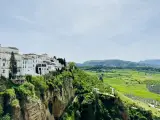
Ronda is perhaps the most beautiful and interesting town in inland Andalusia. Join us on a trip to the town above the El Tajo gorge.
First stop: Plaza de Toros
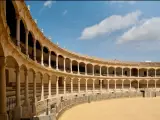
Ronda is perhaps the most beautiful and interesting town in inland Andalusia. As it is less than two hours by car from Torrox along a pleasant route, three of us set off one early April morning in a red convertible. It was the perfect time: the weather was wonderful, neither spring nor summer, yet we were already driving through town with the roof down. Ronda had not yet been overrun by tourists, so we enjoyed it in peace and quiet. We also found excellent parking near Plaza de Toros de Ronda, home to the famous bullring, and began our tour there.
There are several paid car parks in central Ronda, relatively close together. If you park in one of them, you can explore the centre comfortably on foot without moving the car.
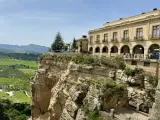
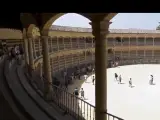
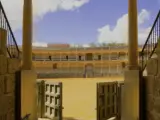
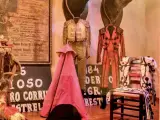
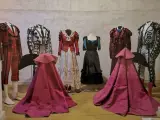
After crossing a small park, we reached Plaza de Toros de Ronda, the bullring. We paid the €8 admission at the ticket office; no online booking is needed. In summer and on public holidays, admission is €10. The ticket includes the bullring and the fascinating museum of bullfighting history, opened in 1984, with original costumes, swords and muletas, period paintings and trophies.
History and tradition of the bullring
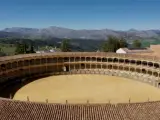
Ronda’s bullring is one of Spain’s most important. It opened in 1785 and is now the country’s oldest surviving working bullring.
The building is not particularly monumental: it is 66 metres wide and seats about 5,000 spectators. By comparison, Seville’s bullring holds 12,500 and Madrid’s as many as 24,000 people.
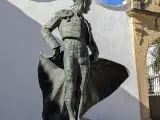
That makes it all the more fascinating. This is where the history of modern bullfighting began, as the Romero family — especially the celebrated Pedro Romero — first introduced fighting a bull on foot with a muleta and sword. Horses had been used previously. Legend has it that Pedro Romero killed more than 5,600 bulls during his career without suffering a serious injury, making him an almost mythical figure in bullfighting.
In his honour, Ronda hosts the Feria de Pedro Romero at the beginning of September, a multi-day celebration with parades in traditional dress, flamenco performances, concerts, fairground attractions, fireworks and, above all, Ronda’s only bullfight: the Corrida Goyesca. This ceremonial event is inspired by the era and style of the painter Francisco Goya; bullfighters wear historical costumes from the 18th and 19th centuries. Goya is also known for La Tauromaquia, his famous series of 33 prints inspired by bullfighting in Ronda.
Part of the series can be seen at the Prado Museum in Madrid or at the British Museum in London.
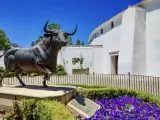
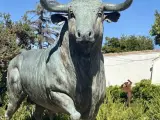
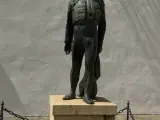
Other important bullfighters from Ronda were Cayetano Ordóñez and, above all, his grandson Antonio Ordóñez. Their statues, along with sculptures of bulls, make irresistible subjects for photographs by the arena exit.
Interestingly, the Ordóñez family’s presence is still very visible in Ronda. The famous Antonio’s grandsons still run the Plaza de Toros.
Another bullfighter who must be mentioned is Curro Guillén — sadly, because he is the only bullfighter to have died in Ronda’s arena. Originally from Seville, he met his fate in Ronda: on 20 May 1820, a bull’s horn gored him in Plaza de Toros. He was buried beneath the sand near the entrance to the arena, not far from the place where Antonio Ordóñez’s ashes were scattered. A street in Ronda is named after him, and 200 years after his death writer and journalist Santiago Sanchez Tráves published a book about his life, Curro Guillén – the Myth Who Died in Ronda.
Puente Nuevo: the bridge above the El Tajo gorge
When we left the arena for the world-famous Puente Nuevo (New Bridge), it already felt more like summer than spring. Fortunately, it was only a short and pleasant walk.
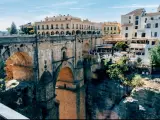
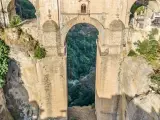
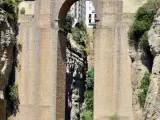
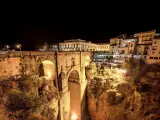
The imposing stone bridge links the historic and modern parts of town above the deep El Tajo gorge, carved here by the Guadalevín River.
The bridge appears on almost every postcard and photograph of Ronda, but standing on it, seeing the depth below and admiring the human skill that created this work in the 18th century without modern technology is breathtaking.
Puente Nuevo is 98 metres high and 66 metres long. It was completed in 1793 after 34 years of construction.
But only on the second attempt. The first bridge was finished in 1735 and collapsed six years later, killing 50 people. Poor workmanship, insufficient supports and a badly closed arch were to blame. In 1751, construction of Puente Nuevo was approved, but its funding had to be resolved first: Ronda released 15,000 reales from the municipal treasury and the rest came from taxes paid by residents.
Puente Nuevo was the world’s tallest bridge for many years. In 1839 it was surpassed by a bridge at Caille in France.
Today, besides linking the two sides of the town, Puente Nuevo is Ronda’s symbol and the area’s most visited attraction.
For centuries, Puente Nuevo has looked on as history, human stories and destinies unfold.
Legend says that before the bridge was built, lovers living on opposite sides communicated secretly with mirrors that reflected the sun’s rays.
In 1917, Ronda witnessed a tragedy when a rock formation collapsed in the gorge in the middle of the night, burying 15 people who lived in mills at the bottom of the Tajo gorge. The mills used the power of the Guadalevín’s currents. Ten members of one family were reportedly among the dead. When we visited Ronda, the riverbed was almost dry, probably because of climate change.
Inside the bridge are rooms that once served as a prison and, for a time, an inn; today they house a small museum devoted to the bridge’s history.
The bridge gained a darker reputation during the Spanish Civil War (1936–1939), when the rooms again served as a prison. It is said that prisoners were thrown from the bridge into the El Tajo ravine, and that the footsteps, voices and cries of their ghosts can still be heard.
Legend also says that some workers died while the bridge was being built, and that their souls guard it and appear above the El Tajo gorge in the fog.
According to local tales, the bridge also witnessed romantic tragedies: unhappy lovers ended their lives by jumping into the bottom of the 122-metre-deep ravine.
Another interesting fact is that the bridge was built from stone quarried directly from the ravine beneath it.
The bridge also inspired Ernest Hemingway and Orson Welles.
Orson Welles was completely enchanted by Ronda and, at his own wish, is buried nearby.
Ernest Hemingway used the motif of unfortunate prisoners thrown from a bridge in his famous Civil War novel For Whom the Bell Tolls. He was also fascinated by bullfighting, which he wrote about in the wonderful novel The Sun Also Rises. His well-known words are: “If I were to go to Spain on my honeymoon, I would go to Ronda.”
The historic centre and the end of our trip
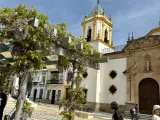
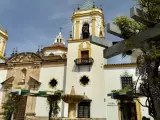
We leave the bridge and head towards Plaza Duquesa de Parcent, where the main historic church, Iglesia de Santa María la Mayor, stands. The square is full of tourist restaurants with outdoor seating; perhaps we did not choose the best one. Next time, we will wander further into the lanes away from the centre and find a typical family restaurant that I can recommend here. Gastronomy is part of history and culture, too.
At an unhurried pace, we walk back towards the car. In a bar, we have a farewell sangria and cortado — coffee with a little hot milk, wonderfully Spanish — take a few last photos, get in and drive away…
It was a beautiful day and we will certainly repeat it, because Ronda is simply worth it. Above all, there are more places on my list that I still want to visit here.